
01
Periodontal Screening
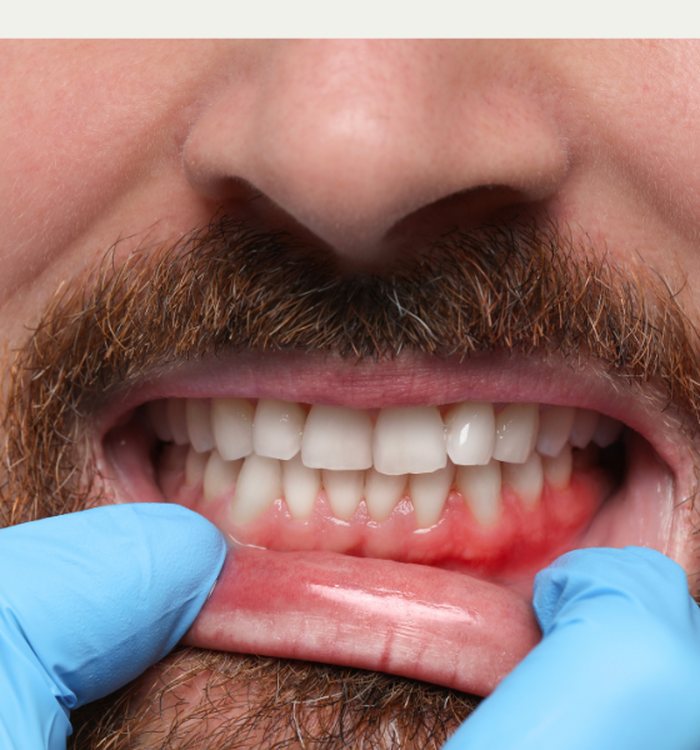
Gum pockets are measured and tracked at routine visits to catch disease early.
Healthy gums are the foundation of a healthy smile. We diagnose and treat gum disease at every stage — from early gingivitis to deep cleanings and ongoing maintenance — to protect your teeth and your overall health.
Gum (periodontal) disease is an infection of the tissue and bone that hold your teeth in place. It usually starts quietly — a little bleeding when you brush, some puffiness — and can progress to receding gums, loose teeth, and bone loss if left untreated. It's also the leading cause of tooth loss in adults.
Research has linked untreated gum disease to heart disease, diabetes, and other systemic conditions, which is why we screen for it at every checkup. Caught early, gum disease is very manageable; the goal is always to stop it before it costs you teeth.
Gum pockets are measured and tracked at routine visits to catch disease early.
A deep cleaning below the gumline that removes hardened bacteria and smooths root surfaces.
Early-stage gum inflammation reversed with targeted cleaning and home-care coaching.
More frequent cleanings that keep treated gums stable long term.
We coordinate with your physician when gum health and conditions like diabetes overlap.
Bleeding gums are not normal, and they're not something to brush past. We treat the underlying infection and then give you a realistic home-care plan you can actually keep up with.
Most gum disease is managed without surgery when it's addressed early. If a case is advanced enough to need a periodontal specialist, we'll coordinate the referral and stay involved in your care.
We measure gum pockets, check for bleeding and recession, and review X-rays.
We stage the disease — gingivitis or periodontitis — and explain exactly what's happening.
Scaling and root planing, usually with local anesthetic for comfort.
We re-measure to confirm the gums are responding and healing.
A personalized cleaning schedule keeps the disease from coming back.
Free, no-pressure conversation with Dr. Esfahani. We'll listen, examine, and tell you honestly what we'd recommend — and what we wouldn't.
We use cookies to run this site and, with your consent, to measure how it’s used (Google Analytics). We never sell your information. See our Cookie Policy.
Strictly necessary cookies are always on. Choose whether to allow analytics.
Required for the site to work. Always on.
Google Analytics, to understand site usage. Aggregated, not used to identify you.